Why I Started Through the Bezel
There is a moment underwater when everything gets quieter.
Not silent. Diving is never really silent. You still hear yourself breathing through the regulator. You still hear bubbles rolling past your ears. You still feel the water moving around you. Sometimes, if you slow down enough, you can hear the little clicks and pops of the reef.
But the normal noise disappears.
No phone. No notifications. No traffic. No deadlines. No constant pull from everything waiting back on land.
Just breathing, depth, time, movement, and the strange calm that comes from being in a place humans were not exactly built to be.
That is where Through the Bezel started for me.
Not as some expert platform. Not as a place where I pretend I have scuba all figured out. Not as a professional underwater filmmaker trying to teach everyone how it is done.
It started as a way to document the journey while I am still in it.
I am still learning. Still asking questions. Still adjusting gear. Still trying to improve buoyancy, planning, camera work, and comfort in different conditions. Every dive gives me something else to think about.
That is the point of this space.
It is the dive journey as it is happening.
What “Through the Bezel” Means
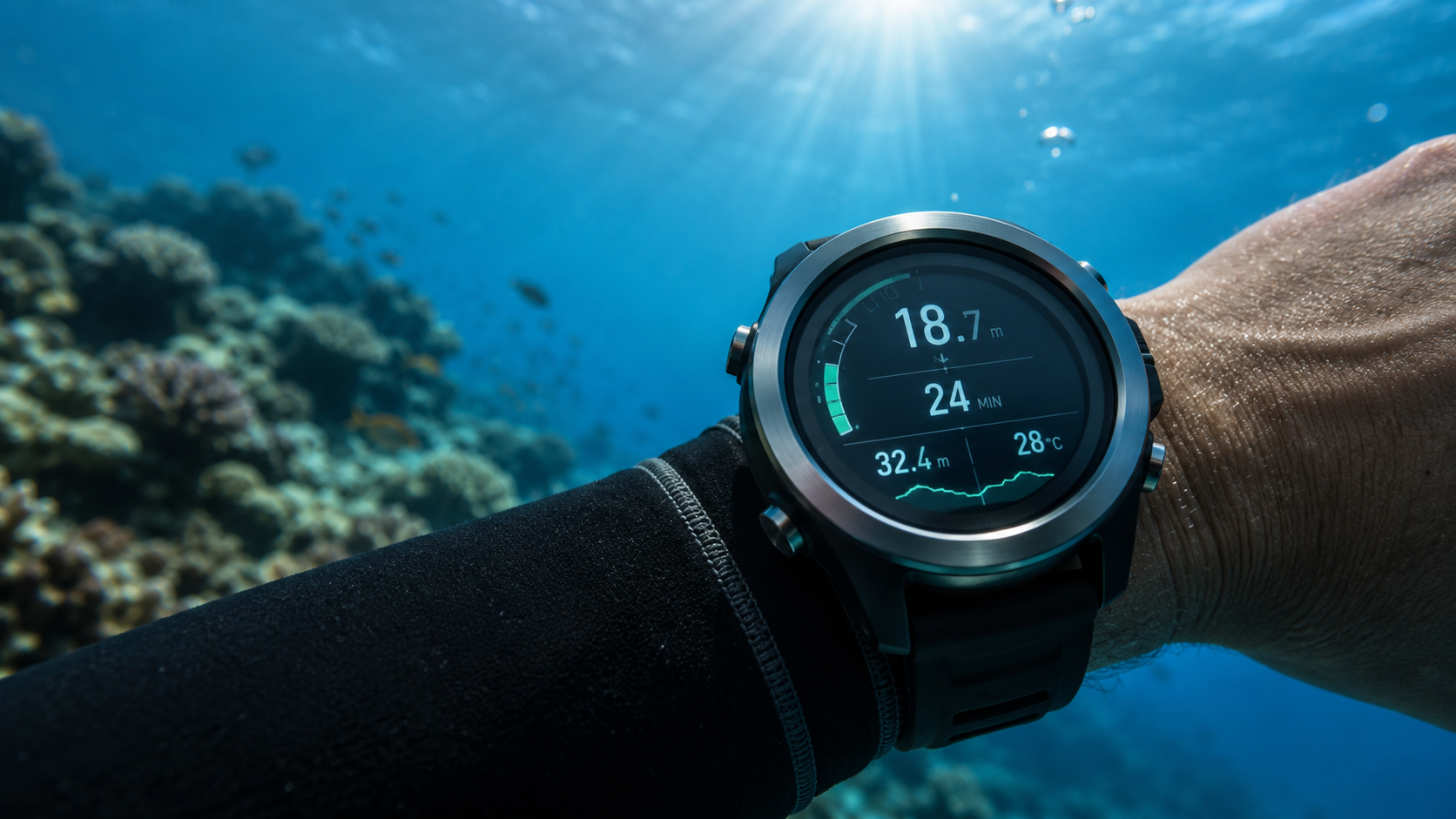
The name came from the way so much of scuba is experienced through small frames.
A dive computer.
A mask lens.
A camera housing.
A pressure gauge.
A GoPro screen.
The edge of a reef wall disappearing into blue water.
Diving narrows your attention in some ways. You care about simple, important things: depth, gas, time, buoyancy, buddy position, current, and ascent rate. Those things are not background details. They are the framework that keeps the dive safe and controlled.
At the same time, diving opens the world up.
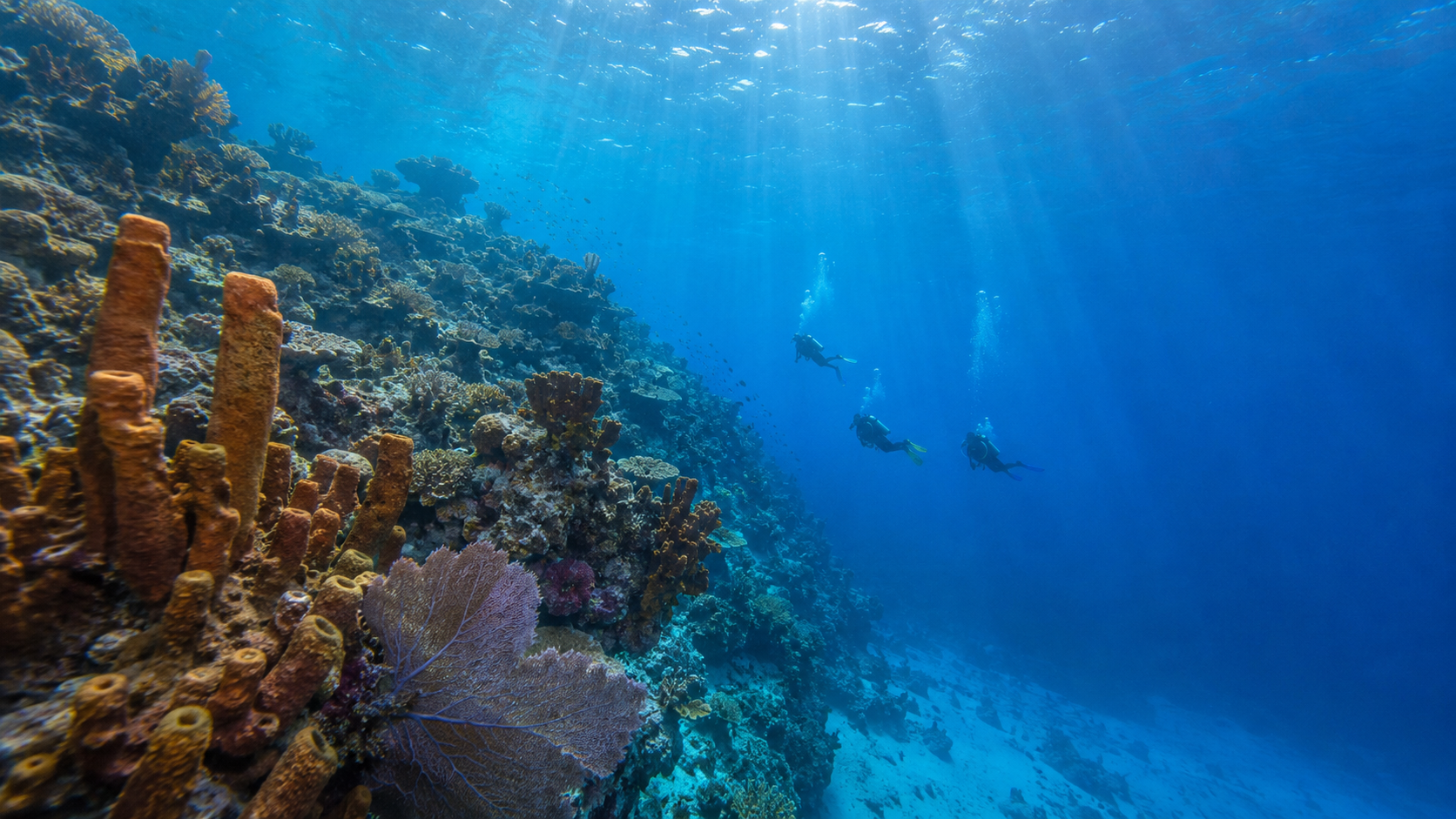
You are suddenly seeing things most people only see in documentaries, travel ads, or aquarium glass. Coral formations. Reef fish. Wrecks. Turtles. Rays. Walls that drop into blue water. Sunlight cutting through the surface above you.
That contrast is what hooked me.
The bezel is the frame.
The story is everything beyond it.
This Is Not a “Look How Expert I Am” Project
I want to be clear about that from the start.
Through the Bezel is not being written from the perspective of someone with thousands of dives and thirty years underwater.
That is not my lane.
This is the perspective of someone building experience one dive, one course, one gear decision, and one trip at a time.
I started where every diver starts: trying to understand the basics and not look completely ridiculous while doing it. Then the questions started stacking up.
How do I get better at buoyancy?
When does Nitrox actually matter?
What changes when I plan deeper dives?
What gear is worth owning, and what gear just looks cool online?
How do I record underwater footage without letting the camera take over the dive?
How do I plan dive trips when not everyone traveling with me dives?
How do I keep getting better without acting like I already know everything?
Those are the kinds of questions that built this section.
Not theory for the sake of theory.
Not gear talk just because gear is fun to talk about.
Not travel content that ignores the actual work of planning a good dive trip.
This is about the real progression of becoming a better diver.
A Scuba Journal, Gear Log, and Travel Notebook
Through the Bezel is going to be a few things at once.
First, it is a scuba journal.
That means writing about the dives, the lessons, the mistakes, the surprises, and the moments that stick with me after the gear is rinsed and drying. Some dives teach you something obvious. Some teach you something small that you only understand later.
Both are worth writing down.
Second, it is a gear log.
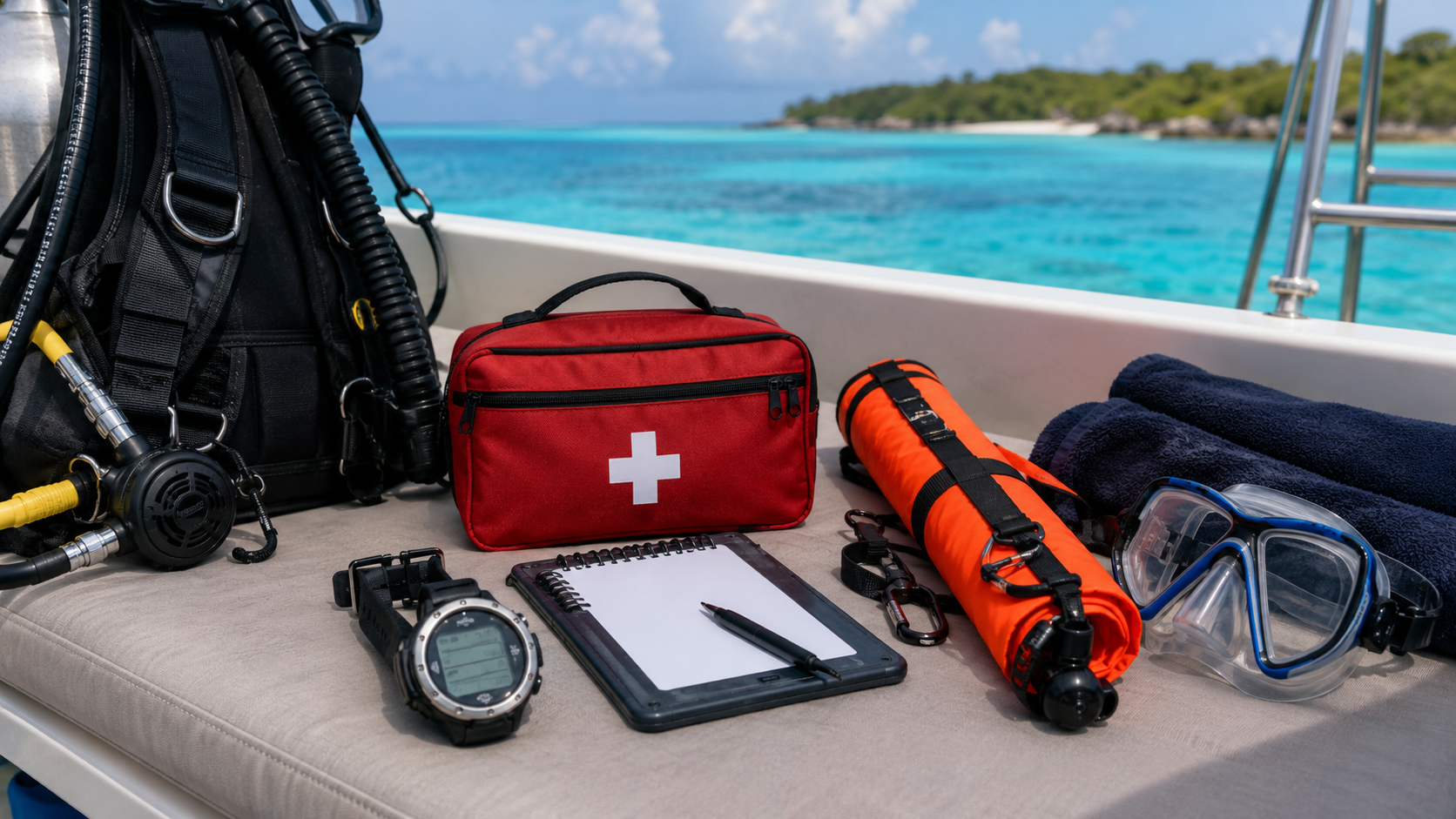
Scuba gear gets complicated fast. Regulators, BCDs, computers, wetsuits, fins, masks, SMBs, reels, lights, cameras, filters, clips, bags, boots, hoses, and plenty of things you do not even know you care about until something annoys you on a boat.
Some gear matters a lot.
Some gear depends heavily on where and how you dive.
Some gear sounds important until you realize it does not solve any problem you actually have.
I want to document what I use, what works, what I would change, and what I would recommend to someone diving the way I dive.
Third, it is a travel notebook.
Dive travel is not just picking the prettiest reef on a brochure. It is boat times, pickup locations, operators, currents, surface intervals, depth profiles, Nitrox availability, visibility, water temperature, family schedules, afternoon plans, and whether the non-divers on the trip are actually going to enjoy the vacation too.
A good dive trip is not only built underwater.
It is built in the planning.
Why Scuba Hit Different
I have done a lot of things in life that required planning, discipline, calm, and trust in a system.
Scuba fits that part of my brain.
It rewards preparation. It punishes carelessness. It gives you freedom, but only if you respect the limits. It requires trust in your gear, your buddy, your training, and your own ability to stay calm when something does not go exactly the way you expected.
There is something about that I really appreciate.
You check your gear. You think through the plan. You pay attention to your buddy. You watch your depth and gas. You manage your buoyancy. You control your breathing. You respect the water.
And then, when all of that starts working together, the reward is hard to explain to someone who has never done it.
You are not just looking at the ocean anymore.
You are inside it.
That changes the way you think about water, travel, and even time.
A thirty-minute dive can feel both short and huge at the same time.
The Learning Curve Is Part of the Story
One of the reasons I wanted to start Through the Bezel is because the learning curve is interesting.
Not embarrassing.
Interesting.
Every diver has early moments. You burn through gas faster than expected. You fight your buoyancy. You overthink your gear. You forget a small step and realize later why it mattered. You come back from a dive and think, “I could have done that better.”
That is not failure.
That is how skill gets built.
The important part is whether you pay attention.
I want this space to be honest about that progression. I want to talk about what I misunderstood, what changed my thinking, what worked better than expected, and what I would tell another diver who is a few steps behind me on the same road.
Because scuba is not just about collecting certification cards.
The training matters. The cards matter. The recognition levels matter.
But the real growth happens when the lessons show up in the water.
Can I control my buoyancy better than last time?
Can I plan the dive more clearly?
Can I stay calmer?
Can I support my buddy better?
Can I protect the reef better?
That is the kind of progress I care about.
Family Is Part of the Dive Plan
Scuba is personal for me, but dive travel is not only about me.
That matters.
A dive trip can be incredible underwater and still be poorly planned for the people traveling with you. If the whole schedule revolves around the divers, everyone else can start to feel like they are just waiting for the “real” vacation to be over.
I do not want that.
Part of the way I plan trips is built around morning diving and keeping afternoons open. Dive early, come back, rinse gear, grab lunch, and still have time for family. That could mean a shaded cultural stop, an animal experience, a waterfront meal, a museum, a light walk through shops, or just an easy dinner after a long day in the sun.
The dive may be the anchor, but it cannot be the whole trip.
That balance will show up a lot in Through the Bezel because it is a real part of how I travel.
I want good dives.
I also want the people with me to want to go again.
The Camera Is Coming Along Too
The underwater camera side of this journey is part of the story, but I am trying to keep it in the right place.
I want good footage. I want clear footage. I want video that helps me remember what the dive actually felt like.
But I do not want every dive to become a camera project.
That is an important line for me.
I use the camera to capture memories, not to take over the dive. If the camera distracts me from my buddy, my buoyancy, my depth, my gas, the reef, or the guide, then the camera has become a problem.
There is also a real learning curve to underwater footage.
Settings. Filters. White balance. Lighting. Depth. Water clarity. Distance. Stability. Editing. When to use the camera and when to put it down.
For me, clarity matters more than cinematic tricks.
I would rather have honest footage that looks like the dive than footage that looks dramatic but fake.
That will be part of Through the Bezel too.
Not from the perspective of a professional filmmaker.
From the perspective of a diver trying to capture the memory without losing the dive.
What You Can Expect Here
Through the Bezel will be a mix of practical scuba topics, personal dive reflection, gear notes, travel planning, and lessons learned.
Some articles will be about training and progression. Some will be about specific gear. Some will be about destinations. Some will be about camera decisions. Some will be about mistakes I do not want to repeat.
The goal is not to be the loudest scuba voice online.
The goal is to be useful, honest, and grounded.
You can expect topics like:
- Dive gear I actually use
- SSI course progression and specialty choices
- Nitrox and dive planning
- Deep Diving preparation
- Buoyancy control
- Dive computers and safety habits
- GoPro underwater recording
- Trip planning with non-divers in mind
- Cozumel, Cabo, Hawaii, and other dive destinations
- Lessons learned after real dives
- Mistakes I would avoid next time
- How I think through risk, comfort, and progression
That is the lane.
Real diving.
Real planning.
Real learning.
Built for the Diver Who Is Still Becoming
I think this is the heart of the whole thing.
Through the Bezel is for the diver who is still becoming.
Still learning.
Still logging dives.
Still adjusting gear.
Still improving buoyancy.
Still trying to understand current better.
Still figuring out which specialties matter most.
Still learning how to record footage without letting the camera become the dive.
Still looking at a dive map and wondering what the actual experience will feel like.
Still staring at blue water and thinking, “I want to go down there.”
That is where I am.
And honestly, I think that is a good place to be.
There is a lot of value in not pretending you are finished.
Final Thought
Scuba has changed how I travel, how I plan, how I think about gear, and how I measure progress.
It has given me a reason to chase clearer water, better habits, stronger skills, and more time below the surface. It has also given me a place where the world gets quieter for a while, and that alone is worth paying attention to.
Through the Bezel is where I am going to document that journey.
The dives.
The gear.
The trips.
The lessons.
The mistakes.
The moments that only make sense once you have heard your own breathing underwater and watched the surface fade above you.
Welcome to Through the Bezel.