How I Plan a Dive Trip with Non-Divers in Mind
A dive trip can be incredible underwater and still miss the mark as a vacation.
That is something I think about a lot because scuba is not always a solo interest. Sometimes the people traveling with you are diving right beside you. Sometimes they are not diving at all. Either way, they are still part of the trip.
That changes the planning.
If every decision revolves around the divers, the non-divers can end up feeling like they are just along for the ride. They get the early alarms, the dock runs, the gear piles, the wet towels, the camera batteries, the dive shop timing, and the “we’ll be back around lunch” routine. What they do not always get is a trip that feels like it was built with them in mind.
That is not how I want to travel.
For me, the goal is to protect the morning dive window without letting scuba consume the whole vacation. I want good dives, but I also want the rest of the day to still feel like family time. That means the boat schedule matters, but so does lunch. The pickup location matters, but so does shade. The dive operator matters, but so does what everyone is doing after the gear is rinsed.
A good dive trip is not planned only from the dive shop outward.
It has to be planned from the people outward.
The Dive Is the Centerpiece, Not the Whole Vacation
I like morning dives.
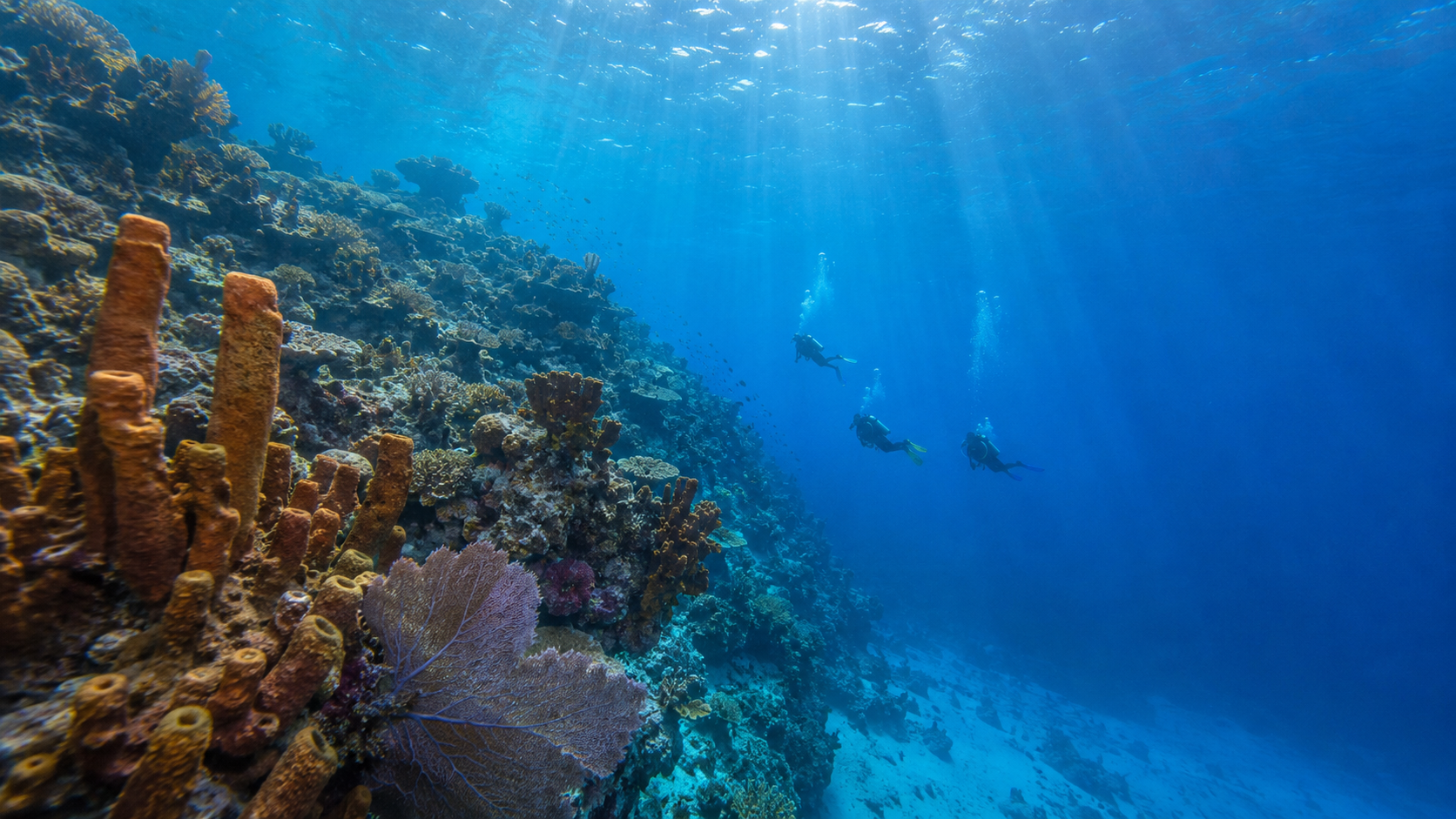
That rhythm works for me. You get up, dive early, get the best part of the day underwater, and still leave room for the rest of the vacation. The dive block gets protected, but it does not eat the whole day.
That structure matters even more when someone on the trip is not diving.
My trip planning logic already leans this direction. A normal dive day assumes a morning two-tank dive, shared afternoon activity recommendations, and relaxed family time in the evening.
That is the basic rhythm I keep coming back to:
Dive in the morning.
Reconnect around lunch.
Do something manageable in the afternoon.
Keep the evening relaxed.
It sounds simple, but simple is the point. A dive trip does not need to be packed from sunrise to bedtime to be successful. In fact, that is usually how a good trip turns into a grind.
The dive can be the centerpiece.
It just should not be the only piece.
Start With the People, Not the Destination
It is tempting to start with the destination.
Where are the best reefs? What sites are famous? Which operator has the best reviews? What wreck is nearby? What resort is closest to the pier?
Those questions matter, but they are not where I start anymore.
I start with who is going.
Who is diving? Who is not? Who wants adventure? Who wants shade? Who likes walking around shops? Who wants good food? Who needs a slower pace? Who will be perfectly happy waiting near the water while the divers are out, and who needs a more structured plan?
For my own family planning, that means accounting for Sweets as a non-diver. Her profile is clear: she does not scuba, prefers relaxed pacing, enjoys local shops, good food, shaded walking areas, cultural or historical sites, and guided animal or nature experiences. It also flags high heat sensitivity and a need to avoid prolonged direct sun.
That changes how I look at a destination.
A place can be great for diving and still be the wrong fit for the whole trip if the non-diver side is weak. If every afternoon is hot, exposed, rushed, or boring for the person who did not dive, then the trip is not balanced.
And balance matters.
The Non-Diver Plan Has to Be Real
“Just relax while we dive” is sometimes a plan.
Sometimes.
There are mornings when the non-diver genuinely wants to sleep in, drink coffee, read, sit near the water, browse nearby shops, or do absolutely nothing. That can be perfect. But it should still be an intentional option, not the leftover plan because nobody thought about it.
A real non-diver plan answers practical questions.
Where will they be while the divers are gone? Is it shaded? Is there food nearby? Is it safe and comfortable? Can they get back to the room easily? Is transportation simple? Will they be stuck waiting in direct sun? Can the day reconnect naturally when the divers return?
Those are not small details.
They determine whether the non-diver feels included or parked.
I do not want Sweets to feel like she is waiting for my vacation to finish before hers can start. If she chooses a quiet morning, that should feel like a good choice. If she wants a light activity, that should be easy to make happen. If the day needs to stay flexible, the plan should already allow for that.
The goal is not to over-schedule the person who does not dive.
The goal is to not make them an afterthought.
Heat and Shade Can Make or Break the Day
Warm destinations look great in photos.
That does not mean every afternoon activity is a good idea.
Heat is one of the biggest things I pay attention to now, especially in places where the sun is direct and the best dive schedule puts us back on land around midday. That is not always the time to start a long outdoor activity.
For Sweets, this matters even more. Her travel profile notes high heat sensitivity, a need to avoid prolonged direct sun, and better comfort when shaded or indoor spaces are part of the plan.
That means I cannot just look at a map and say, “This looks close enough.”
Close is not the same as comfortable.
An afternoon plan after diving should not require a long exposed walk, a crowded sun-baked tour, or a rushed transfer into another hot activity. Better options are usually shaded, indoor, water-adjacent, or easy to cut short if the day is wearing people down.
That might mean a shaded waterfront meal. It might mean a museum. It might mean a covered market. It might mean an animal or nature experience with structure and places to rest. It might just mean lunch, a short stop, and calling it good.
That is not under-planning.
That is respecting the day.
Lunch Is a Planning Anchor
On dive days, lunch does more than feed people.
Lunch is the reset point.
The divers are coming back from the boat salty, hungry, probably a little tired, and needing to rinse gear, check cameras, drink water, and mentally transition out of dive mode. The non-diver may have had a quiet morning, a solo activity, or a completely different experience. Lunch brings the trip back together.
That is why I like using lunch as the anchor between the dive block and the rest of the day.
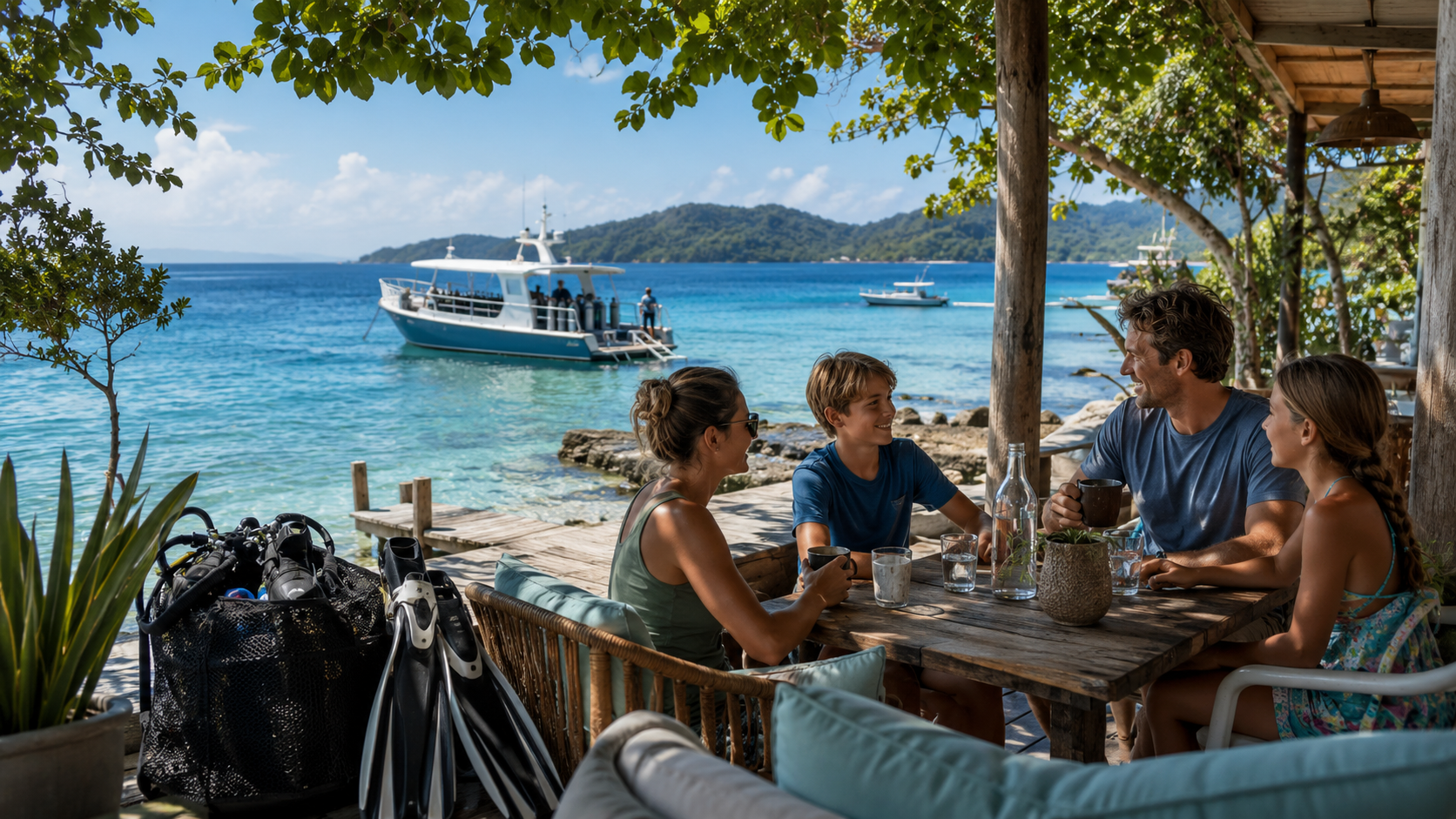
A shaded restaurant or waterfront café can do a lot of work. It gives everyone a place to cool down, talk about the morning, figure out the energy level, and decide whether the afternoon plan still makes sense.
In my activity examples, a shaded waterfront restaurant scores well because it has low sun exposure, full shade, minimal walking, very low intensity, low heat risk, and works well in the afternoon or evening.
That is exactly the kind of thing that makes sense after a two-tank morning.
It is not flashy.
It is useful.
Useful wins a lot of travel days.
Afternoon Activities Should Match Post-Dive Energy
There is a specific kind of optimism that shows up during trip planning.
You sit at home, look at activities, and think, “We can dive in the morning, grab lunch, do this tour, stop at this market, hit this overlook, and still make dinner.”
Maybe.
But after two dives, a boat ride, sun, gear handling, and lunch, that plan might look very different.
That is why post-dive afternoons need to be honest.
I prefer afternoon activities that are low to moderate effort, shaded or indoor when possible, close enough to avoid wasting time, and easy to cancel or shorten. The activity still needs to be interesting, but it does not need to be a major production every day.
My planning files rank options like shaded waterfront restaurants, indoor cultural exhibits or museums, and interactive marine animal experiences as compatible dive-day choices.
That matches how I actually think about it.
The best afternoon plan is not always the biggest plan. It is the one that fits the day everyone is actually having.
Arrival Day Should Not Be Overbuilt
Arrival day is not the time to prove anything.
Travel days already have enough moving parts. Flights, bags, transportation, check-in, groceries, room setup, dinner, orientation, dive confirmations, and gear prep can eat more energy than expected.
If I try to stack a real activity on top of all that, I am usually borrowing energy from the next morning.
My trip structure logic treats arrival day as a no-diving day focused on travel recovery, orientation, low-intensity activities, dinner, settling in, and early rest.
That is the right call.
Arrival day should be simple. Get there. Get settled. Confirm the dive plan. Eat. Hydrate. Prep gear. Sleep.
If something light fits into the day, fine. But the plan should not depend on everyone having extra energy after travel.
Especially not when the first dive morning is coming.
Departure Day Should Stay Flexible
Departure day needs the same kind of restraint.
It is not a dive day. It is a packing, checkout, transportation, timing, and “please do not make this harder than it has to be” day.
The trip logic I use treats departure day as minimal and flexible, with packing, checkout, travel preparation, and only quick shaded restaurant or short indoor shop options if time allows.
That is the right mindset.
Do not build the most complicated activity of the trip on the day everyone is watching the clock. Do not turn checkout into a scavenger hunt. Do not create stress just because there are a few open hours.
Keep it simple.
End clean.
Dive Operators Matter for Non-Divers Too
A dive operator is not only a dive decision.
It is also a family logistics decision.
That is something I pay more attention to now. When I compare operators, I am not only looking at reefs, boats, tanks, guides, and Nitrox. I am also thinking about pickup locations, return time, walking distance, communication, dock access, and whether the schedule lets the rest of the day work.
A great operator with awkward logistics can make the whole trip harder.
A solid operator with clean timing and clear communication can make everything smoother, even for the person who never gets on the dive boat.
Some of the questions I care about now are practical:
| Operator Question | Why It Matters |
|---|---|
| What time is pickup? | Affects the morning routine |
| Where is pickup? | Affects walking, taxi needs, and stress |
| What time do divers return? | Controls lunch and afternoon plans |
| Is the dock easy to access? | Reduces friction |
| Are dives consistently morning-based? | Keeps the schedule predictable |
| Can the same shop handle multiple days? | Builds familiarity |
| Is communication clear? | Helps everyone plan |
| Are non-divers nearby or separate? | Affects comfort and logistics |
The dive happens underwater, but the trip lives on land too.
The operator affects both.
Keep Afternoons Swappable
Even a good plan needs room to bend.
Weather changes. A dive runs late. Lunch takes longer. Someone gets tired. Someone gets too much sun. A camera battery dies. Gear needs attention. The non-diver finds something they would rather do. The plan that looked perfect at breakfast might feel like too much by 2 PM.
That is normal.
This is why I like having hot-swap afternoon options. Not a rigid itinerary. More like a set of choices that match the same energy level.
| Primary Plan | Easy Backup |
|---|---|
| Outdoor shaded animal or nature experience | Indoor museum |
| Market walk | Café and short shop stop |
| Waterfront lunch plus stroll | Lunch only |
| Cultural stop | Dessert spot and rest |
| Light scenic drive | Back to room and dinner later |
That flexibility protects the trip.
It keeps one change from wrecking the whole day. It also keeps the plan from becoming something everyone feels obligated to push through just because it was written down.
A good plan should help the day work, not bully everyone into finishing it.
Shared Evenings Matter
Evenings are where the trip often becomes a family vacation again.
The diving is done. The gear is rinsed. The cameras are charging. Everyone has had a chance to cool down. The pressure of the day drops a little.
That is when a relaxed dinner, dessert stop, quiet bar, waterfront walk, or light entertainment can matter more than another major excursion.
The non-diver profile I use includes family dinners, quiet bars or lounges, and light entertainment as evening interests.
That matters because it reminds me not to spend all the planning energy on the morning dives.
A good evening can make the whole day feel connected. A bad evening can make even a good dive day feel like everyone just survived separate schedules.
I want the evening to bring the trip back together.
Do Not Make Every Day the Same
Dive trips can get repetitive if every day follows the exact same pattern.
Dive.
Lunch.
Rest.
Dinner.
Repeat.
Sometimes that is exactly what the trip needs. I am not against simple days. But over a week, especially with a non-diver along, I like having some variety.
Not chaos. Just texture.
Maybe one museum or cultural afternoon. One shaded waterfront lunch day. One animal or nature experience. One shopping or market stop. One recovery afternoon with almost nothing planned. One slightly nicer dinner.
That kind of rhythm keeps the week from blending together without turning every day into a production.
The dive plan can stay consistent while the non-dive side gives the trip some shape.
That is the balance I want.
The Best Dive Trip Is the One Everyone Wants to Repeat
This is the real test.
Not whether the dives were good.
Of course I want the dives to be good. That is the reason I am looking at the destination in the first place. But if I come home thinking the diving was great and the non-diver had a mediocre week, that is not a complete win.
The question is: would everyone go again?
If the divers loved the water but the non-diver felt ignored, the trip needs work. If the non-diver had a great vacation but the diving was poorly planned, that also misses the point.
The win is when both sides work.
The divers get strong morning dives. The non-diver gets comfort, shade, food, interesting options, and relaxed pacing. The family gets afternoons and evenings together.
That is the model I am trying to build.
My Basic Dive Trip Framework
The framework I keep coming back to is simple:
| Day Type | Main Goal |
|---|---|
| Arrival Day | Settle in, eat, hydrate, confirm logistics, rest |
| Dive Day Morning | Two-tank dive block |
| Dive Day Midday | Return, rinse, lunch, reset |
| Dive Day Afternoon | Shared low-stress activity |
| Dive Day Evening | Relaxed dinner or light entertainment |
| Departure Day | Keep flexible, avoid stress |
It is not complicated, and that is why it works.
Complicated trips break easily. Simple trips with good backups can handle real life.
That is especially important when diving is involved, because dive days already have enough variables: weather, boats, current, visibility, energy, gear, and timing.
The rest of the plan should support the dive day, not add more friction to it.
Final Thought
Planning a dive trip with non-divers in mind is not about apologizing for diving.
It is about respecting the whole vacation.
Scuba may be the reason I am excited about a destination, but it is not the only thing that matters once we get there. The people on the trip matter. Their comfort matters. Heat matters. Shade matters. Food matters. Afternoons matter. Evenings matter.
A great dive trip should not make the non-diver feel like they are waiting for the real vacation to start.
They should be part of the plan from the beginning.
That is how I want to travel.
Morning dives. Shared afternoons. Relaxed evenings. Good food. Enough shade. Flexible plans. Better memories.
A trip everyone wants to do again.